How to Buy an Electric Car in the DC Area
A practical guide to buying or leasing an EV in Washington DC, Northern Virginia, and Maryland. Covers the federal tax credit, state incentives, which vehicles qualify, and how to navigate the process without overpaying.
3/27/20266 min read
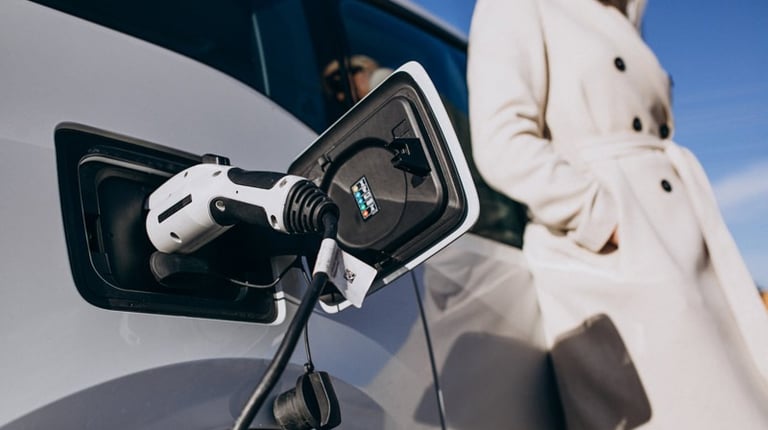
Electric vehicle sales in the DC metro have grown steadily, and for good reason. The region has strong charging infrastructure, relatively short average commutes, and a concentration of buyers who follow technology and policy closely. The federal government also made the math more attractive with a restructured tax credit that now applies at the point of sale rather than months later at tax time.
But buying an EV in the DC area involves more moving pieces than a conventional car purchase. The federal tax credit has income limits, vehicle price caps, and manufacturer eligibility rules that change. Virginia, Maryland, and DC each have their own incentive structures. And the lease versus buy decision plays out differently for electric vehicles than it does for gas-powered ones.
This guide covers what you need to know before you buy.
The Inflation Reduction Act restructured the federal EV tax credit significantly. Here's how it works as of this writing, though the rules are subject to change and you should verify current eligibility before making any decisions based on the credit.
The credit amount. New EVs can qualify for up to $7,500 in federal tax credit. Used EVs can qualify for up to $4,000 (or 30% of the sale price, whichever is less).
Point-of-sale transfer. Starting in 2024, you can transfer the credit directly to the dealer at the time of purchase, effectively reducing the purchase price by up to $7,500 rather than waiting to claim it on your tax return. Not all dealers are set up for this yet, but most major EV dealers are.
Income limits. To claim the new vehicle credit, your modified adjusted gross income must be under $150,000 (single filer), $225,000 (head of household), or $300,000 (married filing jointly). For used vehicles, the limits are lower: $75,000, $112,500, and $150,000 respectively.
Vehicle price caps. New EVs must be priced under $55,000 for sedans and hatchbacks, or under $80,000 for SUVs, trucks, and vans. This affects eligibility for some popular models, particularly in higher trims.
Manufacturer and assembly requirements. Vehicles must be assembled in North America to qualify, and there are sourcing requirements for battery components and critical minerals that phase in over time. These rules mean that not every EV qualifies, and eligibility varies by trim level and production date. Always verify the specific VIN you're purchasing, since eligibility can differ between units of the same model.
The lease loophole. EVs that don't qualify for the consumer tax credit under the purchase rules may still qualify under the commercial clean vehicle credit when leased, because the leasing company (not the lessee) claims the credit. Many manufacturers pass this savings through to the lessee in the form of a lower cap cost or enhanced residual value. This is worth understanding before you decide between buying and leasing, particularly for imported EVs that don't meet the assembly requirements.
The Federal Clean Vehicle Tax Credit
Maryland. Maryland offers a state excise tax credit for qualifying EVs, up to $3,000 depending on the vehicle's price and battery capacity. The Maryland Clean Cars Act has been expanded and renewed multiple times. Availability depends on funding levels, which can be exhausted during peak periods, so timing matters.
Virginia. Virginia does not currently offer a broad consumer EV purchase tax credit at the state level, but EV owners are eligible for a free clean special fuel license plate that grants access to HOV lanes regardless of occupancy. For buyers with long highway commutes, this is a practical benefit worth factoring in.
Washington DC. DC exempts EVs from the excise tax on vehicle sales and registration, which produces meaningful savings at the point of purchase. DC also has an EV incentive program for income-qualified residents that provides rebates on EV purchases and home charging equipment.
Utility incentives. Dominion Energy Virginia, Pepco, and other regional utilities have offered rebates on home EV charger installation. Check with your utility provider before installing a home charger, as these programs change frequently.
State and Local Incentives in the DC Area
The conventional wisdom around leasing versus buying shifts somewhat for electric vehicles.
The case for leasing an EV. EV technology is evolving quickly. Battery range, charging speed, and software capabilities are improving at a faster rate than conventional vehicles.
Leasing limits your exposure to depreciation risk in a category where resale values are harder to predict. It also, as noted above, may give you access to federal incentives on vehicles that don't qualify for the consumer purchase credit.
The case for buying an EV. If you drive high mileage, a lease's mileage limits become costly. If you plan to keep the vehicle for many years, buying typically produces lower total cost of ownership. The federal tax credit on a purchase stays with you in full rather than being filtered through a leasing company's pricing decisions.
The home charging question. If you own your home and can install a Level 2 charger, the ownership math tilts more favorably toward buying. If you rent or have irregular access to charging, leasing a vehicle while the infrastructure around you develops may be the more flexible choice.
Our car leasing assistance covers the mechanics of lease evaluation in more detail, including how to assess whether a leasing company is actually passing through the tax benefit or simply retaining it as margin.
Buying vs. Leasing an EV in the DC Area
Tesla operates differently from every other automaker in the DC area. There are no independent Tesla dealers. Pricing is set by Tesla directly, published online, and not negotiable. The buying experience is largely digital, with minimal human interaction until delivery.
For buyers considering a Tesla, the process is straightforward: configure online, place an order, wait for delivery. There is no negotiation to be done on the vehicle price. What can be evaluated is the financing rate Tesla offers versus what you can get through your own bank or credit union, and whether the trade-in value Tesla quotes for your current vehicle is competitive.
Every other EV brand sells through franchised dealers, which means the same negotiation dynamics as any other car purchase. Pricing on the Hyundai Ioniq 6, Ford F-150 Lightning, Chevrolet Equinox EV, Kia EV6, BMW iX, Rivian R1T, or any other non-Tesla EV is negotiable. Dealer markups on popular EV models have been common when inventory is tight, and factory order versus lot purchase can affect both price and federal credit eligibility depending on timing.
Navigating Tesla vs. Every Other Brand
The federal tax credit alone creates more complexity than most buyers want to manage. Add in state incentives, lease versus buy analysis, manufacturer eligibility rules, and the normal negotiation dynamics on non-Tesla EVs, and the process rewards buyers who do a lot of research or have someone doing it for them.
We verify credit eligibility for your specific vehicle. Eligibility varies by VIN, trim, and production date. We confirm which vehicles qualify before any deal is structured.
We factor in all available incentives. Federal credit, state incentives, utility rebates where applicable, and any manufacturer incentives are all part of the deal analysis before we contact a dealer.
We evaluate the lease versus buy decision for your situation. Based on your income, mileage, how long you plan to keep the vehicle, and which models you're considering, we can give you a clear read on which structure makes more financial sense.
We negotiate non-Tesla EV deals the same way we negotiate any other vehicle. Cap cost on a lease, price on a purchase, financing rate, trade-in value. The EV label doesn't change the fundamentals of dealer negotiation.
For buyers who want us to handle the entire process, including delivery coordination and trade-in pickup, see our auto concierge services. For buyers focused on getting the best deal, our auto broker covers the full scope of what we do. We serve the entire DC metro area, including all of car buying service Northern Virginia and car buying service Maryland.
See our pricing for details on how it works.
What a Car Buying Service Does for EV Buyers
How do I know if a specific EV qualifies for the federal tax credit?
The IRS maintains a current list of qualifying vehicles at fueleconomy.gov. Eligibility is determined at the VIN level for some models, so confirm the specific vehicle you're purchasing rather than relying on general model-level guidance.
Can I get the federal credit on a used EV?
Yes. Used EVs can qualify for a credit of up to $4,000 or 30% of the sale price, subject to income limits and a vehicle price cap of $25,000. The used vehicle must be at least two model years old and purchased from a licensed dealer.
Do EV dealers mark up prices above MSRP?
They have, particularly on high-demand models with limited inventory. Market conditions vary. In some cases, negotiating below MSRP is possible; in others, dealer markups have been significant. Current market conditions for specific models are part of what we research before any dealer outreach.
Is charging infrastructure good enough in the DC area?
For most buyers in the DC metro, yes. The region has dense public fast-charging coverage, and the majority of EV owners charge primarily at home. Long highway trips on I-95 and I-270 are well-covered by major charging networks. Rural gaps exist further from the city.
Can you help me order a vehicle from the factory?
Yes. Factory orders can be advantageous for certain models and may affect federal credit eligibility timing. We can walk through whether a factory order makes sense for your situation.
Frequently Asked Questions
Buying or leasing an EV in the DC area and want to make sure the deal is structured correctly?
Tell us what you're considering and we'll handle the research, incentive verification, and negotiation.